What is Responsive Web Design?

A circular badge with a blue globe icon, the text
Alejandro Rivas
December 2, 2025

In the digital age, where people access websites from a variety of devices and screen sizes, having a website that works seamlessly across platforms is no longer optional—it’s essential. This is where responsive web design (RWD) comes into play. But what exactly is responsive web design, and why is it so important for businesses in Houston, The Woodlands, and beyond? In this blog, we’ll break down the concept, explore its importance, and discuss how you can leverage it to improve your online presence.


Introduction to Responsive Web Design

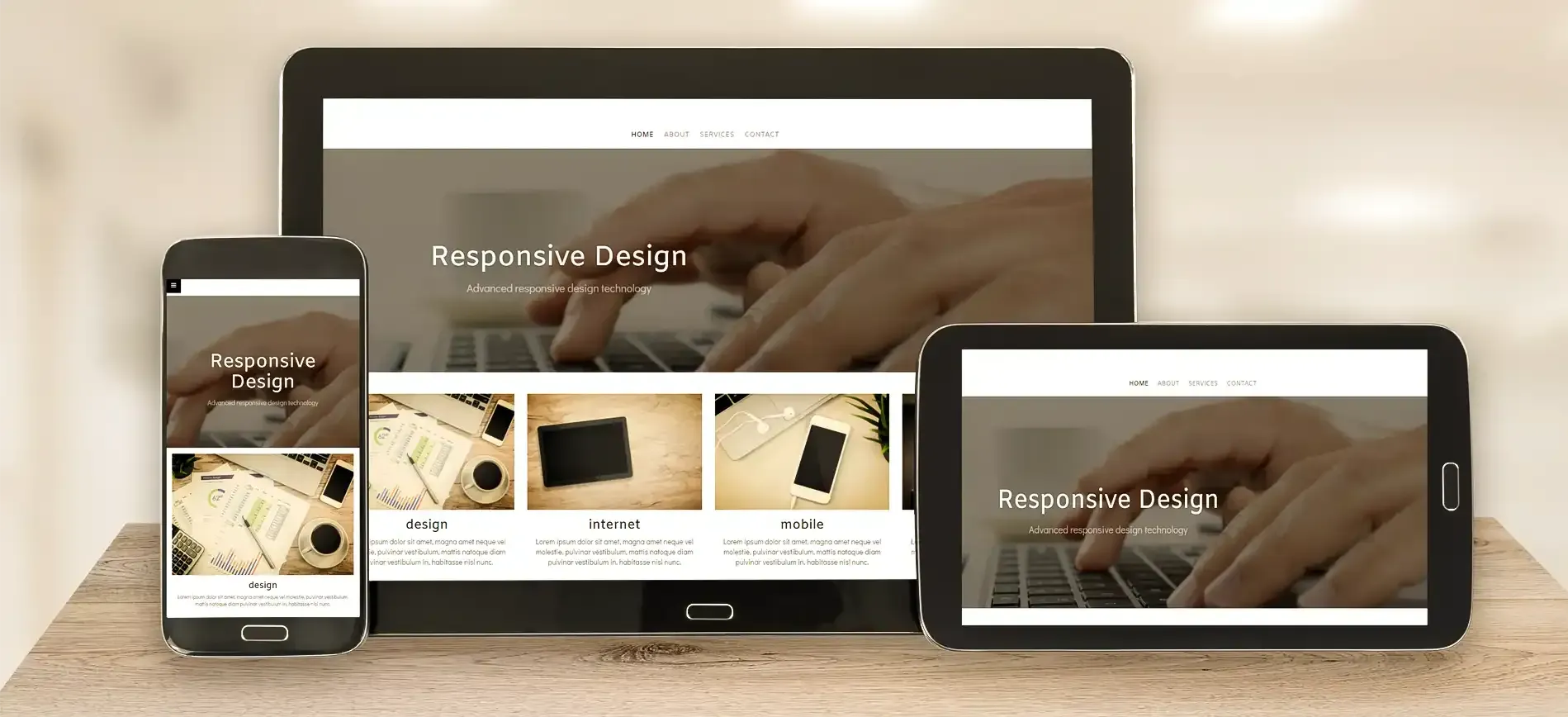
Responsive web design is a design approach that ensures websites adapt dynamically to different screen sizes and orientations. Whether your visitors are using a desktop, tablet, or smartphone, responsive websites adjust their layout and content to provide an optimal viewing and interaction experience.


Examples of Responsive Web Design


See How WSI Urdaneta Group Makes Websites Work Across All Devices
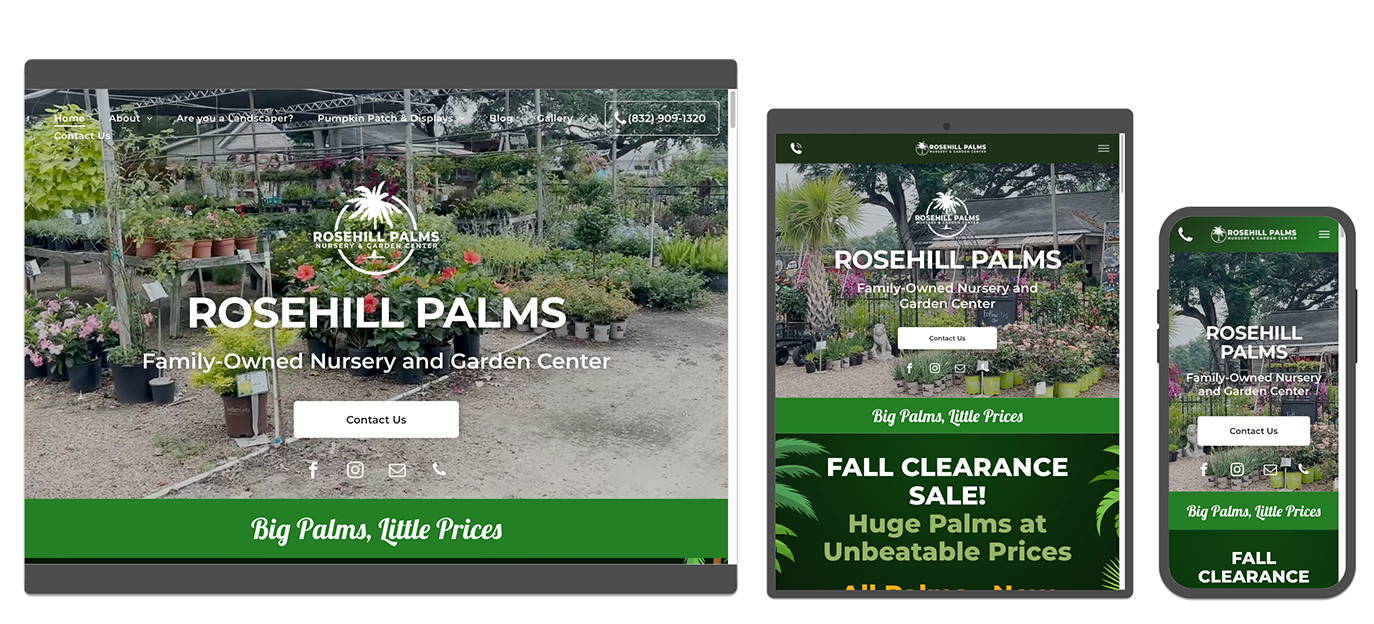
WSI Houston Responsive Web Design example (Rosehill Palms)

Rosehill Palms

Family-Owned Nursery and Garden Center
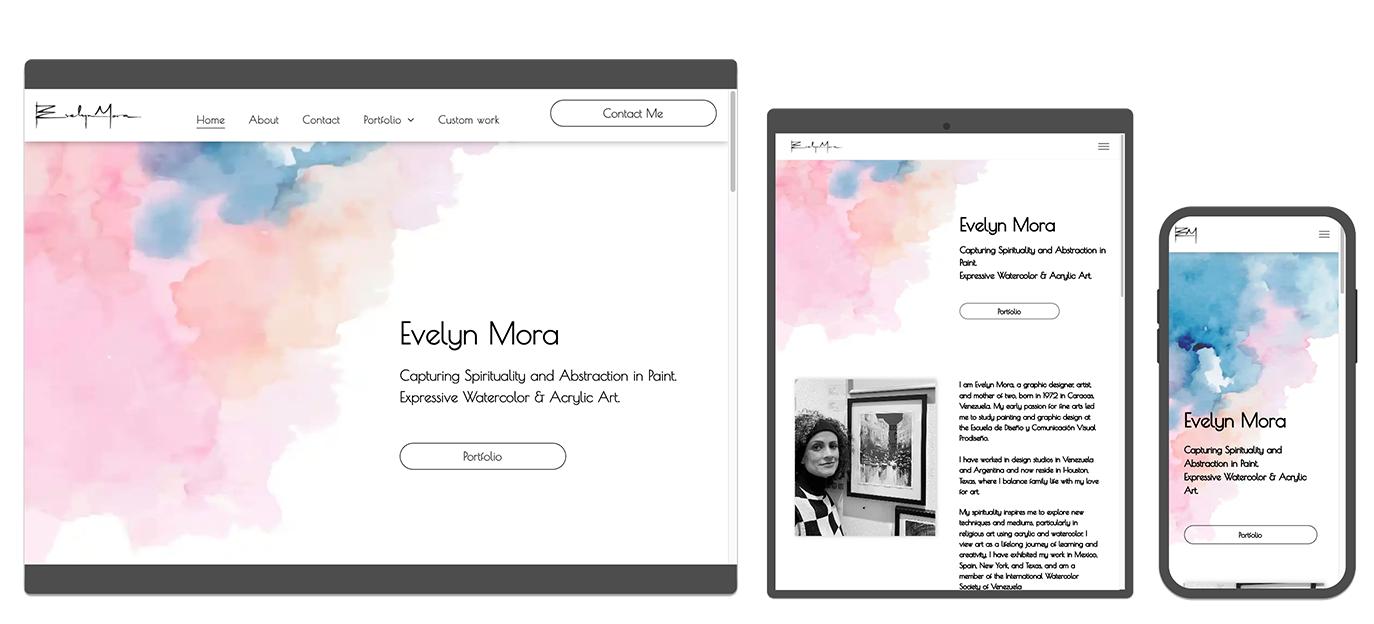
WSI Houston Responsive Web Design example (Evelyn Mora)

Evelyn Mora

Watercolor Artist

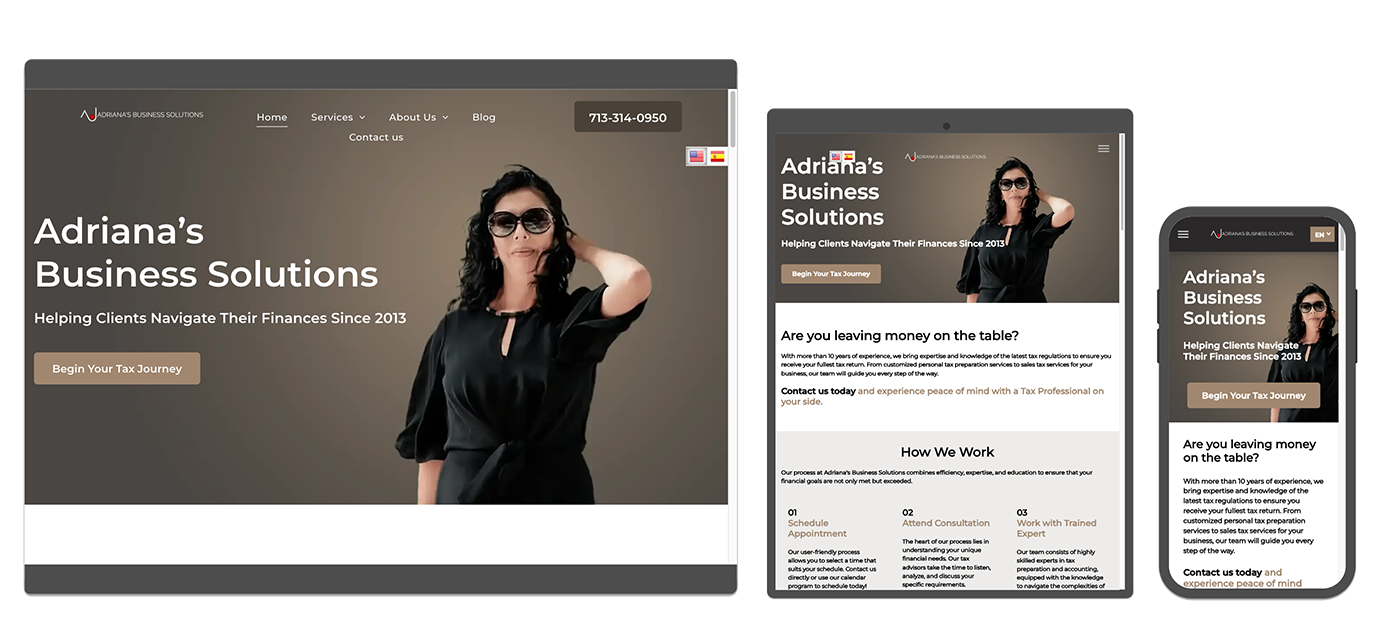
WSI Houston Responsive Web Design example (Adriana's Business Solutions)

Adriana's Business Solutions

Tax and Business Consulting
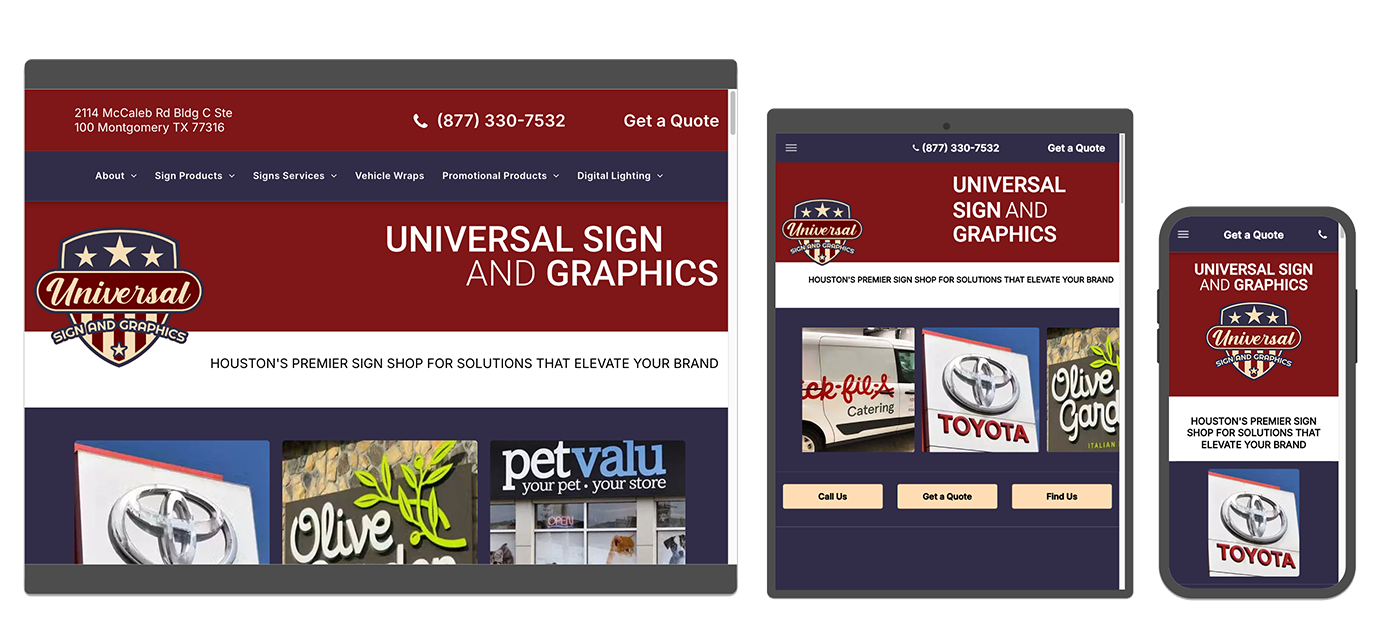
WSI Houston Responsive Web Design example (Universal Signs and Graphics)

Universal Sign and Graphics

Outdoor and Indoor Custom Business Signage


Why is Responsive Web Design Important

Responsive web design is vital in today’s mobile-first world, not only for user experience but also for search engine optimization (SEO).


  • Mobile-First Indexing: Google prioritizes mobile-friendly websites in its rankings. If your site isn’t responsive, you risk falling behind competitors in search results.
  • Enhanced User Experience: A responsive website ensures visitors can easily navigate and interact with your content, regardless of the device they use. This reduces bounce rates and increases time spent on your site.
  • Increased Reach: Responsive design makes your site accessible to a broader audience, catering to users on all devices.
  • AI Visibility: If your site doesn't rank in Google, it will be very difficult to be considered by AI LLMs.


Does Your Website Need to Be Responsive?


The short answer: Yes.


About 75% of potential customers search for local companies on their smartphones; in Houston and The Woodlands, some industries exceed 80%. A non-responsive website not only frustrates users but also harms your brand reputation and SEO performance.


How Responsive Websites Work


Responsive websites rely on advanced techniques to ensure seamless adaptation across devices.


Fluid Grid Layouts


A fluid grid layout is the backbone of responsive web design. Unlike fixed layouts, fluid grids use relative sizing–like percentages rather than fixed units like pixels–enabling elements to resize proportionally based on the screen size. This ensures that your website's structure remains intact, whether viewed on a large monitor or a small phone screen.


Media Queries


Media queries are CSS rules that apply different styles based on device characteristics. For example, a three-column desktop layout might become a single-column layout on a smartphone, ensuring the content remains readable.


Flexible Images and Media


Images and videos can adjust their size and resolution based on the device being used.


Importance of Mobile-Friendly Design


With mobile devices accounting for over 50% of global web traffic, having a mobile-friendly design is non-negotiable. A responsive site guarantees that buttons are tappable, fonts are legible, and navigation is intuitive on smaller screens.


Common Practices in Responsive Web Design


Designers and developers follow these best practices to create responsive websites:


  • Prioritize Content: Display the most crucial content first for smaller screens, ensuring users can find what they need quickly.
  • Use Scalable Vector Graphics (SVGs): SVGs ensure images look sharp on all devices without compromising load speed.
  • Adopt a Mobile-First Approach: Start by designing for smaller screens and scale up to larger screens, rather than the other way around.
  • Optimize Loading Speed: Compress images, minimize code, and leverage caching to ensure fast load times across devices.


Benefits of Responsive Web Design


Responsive web design offers a wealth of benefits, including:


  • Improved SEO: Google’s algorithms favor mobile-friendly, responsive websites, giving you a better chance of ranking higher in search results.
  • Cost-Efficiency: A single responsive website is easier and cheaper to maintain compared to managing separate desktop and mobile versions.
  • Higher Conversion Rates: A seamless user experience across devices reduces friction and encourages users to take action, whether it’s making a purchase or filling out a contact form.
  • Future-Proofing: As new devices with varying screen sizes emerge, a responsive design ensures your website stays relevant and functional.


Future of Web Design


Responsive web design isn’t just a trend—it’s the foundation of modern web development. As the digital landscape evolves, websites must be flexible enough to meet users’ needs on all devices. For Houston businesses, adopting responsive web design can significantly improve user experience, boost SEO, and enhance your overall online presence.


At WSI Urdaneta Group, we ensure that every website we develop is fully responsive and specifically optimized for Greater Houston mobile users. Whether your customers are browsing on smartphones, tablets, or desktop computers, they'll enjoy seamless navigation and perfect visibility of your content.


Ready to enhance your digital presence? WSI Urdaneta Group specializes in creating SEO-friendly websites tailored to your business needs. Contact us today to get started!


The Best Digital Marketing Insight and Advice

Our Blog is a great place to get tips, tricks, and best practices on all things digital marketing in Houston. Subscribe and get our posts as soon as they are published.

Subscribe Blog

I consent to WSI collecting my contact details and sending me digital communications.*

*You may unsubscribe from digital communications at anytime using the link provided in WSI emails.
For information on our privacy practices and commitment to protecting your privacy, check out our Privacy Policy and Cookie Policy.

Don't stop the learning now!

Here are some other blog posts you may be interested in.
The Evolution of AI in Landscaping: What Changed From 2025 to 2026 blog image
By Juan Carlos Urdaneta August 20, 2026
Summary: A year ago, AI in landscaping meant uploading a photo and getting one styled image back. By 2026, it means full design pipelines, smarter robotic mowers, predictive routing, and AI-driven client retention. Here's what actually changed, and what it means for landscaping businesses in Houston and The Woodlands. Where Landscaping AI Stood in 2025 In 2025, AI adoption in the green industry was more talk than practice. According to the 2025 Aspire Landscape Industry Report, 83% of landscaping professionals had not adopted any AI tools. The tools that existed were narrow: a photo in, one styled rendering out. No zone-verified planting suggestions, no contractor-ready deliverables, no real integration with day-to-day operations. The businesses that did adopt AI, though, reported a clear payoff. Every respondent in that 17% who had implemented AI said it positively impacted their business. That gap between adoption and results is exactly what changed over the following year. What Actually Changed in 2026 AI Design Tools Went From One Render to Full Pipelines Twelve months ago, AI landscape design meant uploading a yard photo and picking a style preset. Want a different angle? Run it again. In 2026, the same request produces a full pipeline: multiple photorealistic renders, a planting plan checked against USDA hardiness zones, and in some tools, a contractor blueprint and bill of quantities, generated from a single upload. For Houston landscaping businesses, this matters at the sales stage. The biggest objection in a landscaping pitch is usually "I can't picture it." Showing a homeowner in The Woodlands or Tomball a realistic rendering of their own yard, on the spot, changes that conversation. Robotic Mowers Got Smarter (and More Popular) The robotic mower market moved from a niche product to a real category. Global market value is projected to grow from $8.47 billion in 2024 to $21.97 billion by 2033. Manufacturers leaned in hard: Husqvarna alone launched 13 new boundary wire-free models, and newer AI vision systems now include obstacle avoidance and night operation. For commercial landscaping crews in Greater Houston, this shifts labor away from routine mowing and toward higher-value work like design, hardscaping, and client-facing services. Operations: Smarter Routing and Predictive Maintenance The most practical AI adoption in landscaping isn't in design; it's in the back office. AI-driven route optimization now factors in real-time traffic and weather to cut travel time between jobs. Predictive maintenance flags equipment issues before a mower or truck breaks down mid-route. And AI-enabled irrigation systems adjust watering based on soil and weather data instead of a fixed schedule, which matters directly in a market with Houston's rainfall swings and water restrictions. Client Retention Became an AI Use Case Too Landscaping has historically focused on winning new clients. That's shifting. Industry reporting shows 54% of contractors now name client retention as vital to their bottom line, and for good reason: existing relationships already account for the majority of revenue at most landscaping companies. AI-driven CRM tools are starting to flag at-risk accounts, declining engagement, or service gaps before a client cancels, making retention proactive instead of reactive. See how WSI Urdaneta Group helped Rosehill Palms grow with a full digital strategy → The Adoption Gap: Why Most Houston Landscaping Businesses Are Still Waiting The barriers haven't disappeared. Landscaping professionals who haven't adopted AI cite cost (50%), lack of time (49%), and the learning curve (43%) as the top reasons. Those are legitimate concerns for a business running lean crews and thin margins. But the same data shows that businesses that adopted AI aren't reporting mixed results. They're reporting consistent gains. In a market like Houston, where Green Industry competition is dense across Tomball, Cypress, Spring, and Conroe, that gap between "waiting" and "adopting" is becoming a real competitive edge, not just a talking point. What This Means for Houston Landscaping Businesses You don't need to become a tech company to benefit from any of this. The businesses seeing results in 2026 aren't necessarily the biggest ones; they're the ones that picked one or two practical applications and stuck with them: AI-assisted design renders to close more sales, route optimization to get more done with the same crew, or a retention-focused CRM to protect the client base they already have. The common thread is starting narrow. Trying to adopt everything at once is exactly how landscaping businesses end up back in the 83%. Learn how WSI Urdaneta Group's AI Consulting services can help your business identify the right starting point → How Houston Landscaping Businesses Can Start Without Overhauling Everything Pick one workflow. Not five. The businesses that adopt AI successfully usually start with a single pain point: sales visuals, route planning, or client communication, not a full operational overhaul. Involve your team early. The learning-curve barrier is real, but it's smaller when crew leaders and account managers help choose the tool, not just being told to use it. Measure before and after. Track the specific metric the tool is supposed to move, whether that's close rate on estimates, drive time between jobs, or client churn, so you know if it's actually working for your business. Pair operational AI with visibility. None of this matters if potential clients can't find you first. As AI-powered search tools like ChatGPT and Google AI Overviews become part of how Houston homeowners research landscaping companies, showing up there matters as much as showing up in the Map Pack. Explore Adaptive SEO for Houston landscaping and Green Industry businesses → Common Questions Houston Landscaping Businesses Ask Do I need AI to stay competitive in Houston's landscaping market? Not immediately, but the gap is widening. Most businesses still haven't adopted AI, but the ones that have report consistent gains, and early adopters in a competitive market like Houston, Tomball, and The Woodlands tend to keep that advantage as tools mature. What's the easiest place to start with AI in a landscaping business? Sales-side design tools tend to have the fastest, most visible payoff. Showing a client a realistic rendering of their property on the spot shortens the sales conversation without changing how your crews operate. Is AI going to replace landscaping crews? No. Every credible industry report points in the same direction: AI handles routine, repeatable tasks like scheduling, routing, and initial design drafts, freeing crews and designers to focus on the work that requires judgment and craft. How does this connect to how customers find my business? Increasingly, through AI. Search is expanding beyond Google into tools like ChatGPT and AI Overviews. A landscaping business that only optimizes for traditional search results risks becoming invisible in the newer channels homeowners are starting to use for research. Ready to Bring AI Into Your Landscaping Business the Right Way? At WSI Urdaneta Group , we work with Green Industry businesses across Houston and The Woodlands, as an official TNLA member, to figure out where AI actually fits, and where it doesn't. Whether that's identifying the one workflow worth automating first, or making sure your business shows up when Houston homeowners search for landscaping help, we can help you build a plan instead of guessing. Get started: - Schedule a free consultation with WSI Urdaneta Group - Explore our AI Consulting services - See how Rosehill Palms grew with WSI Urdaneta Group - Call us directly: (713) 352-0580 Let's find the AI that actually fits your landscaping business, not just the trend.
Google Business Profile Optimization: What Houston Businesses Get Wrong image blog
By Juan Carlos Urdaneta May 8, 2026
Most Houston businesses waste their Google Business Profile. Learn what top-ranking Houston companies do differently to dominate local search and drive more calls.