Adaptive SEO in 2026: How Houston Businesses Get Found in Google and AI Search
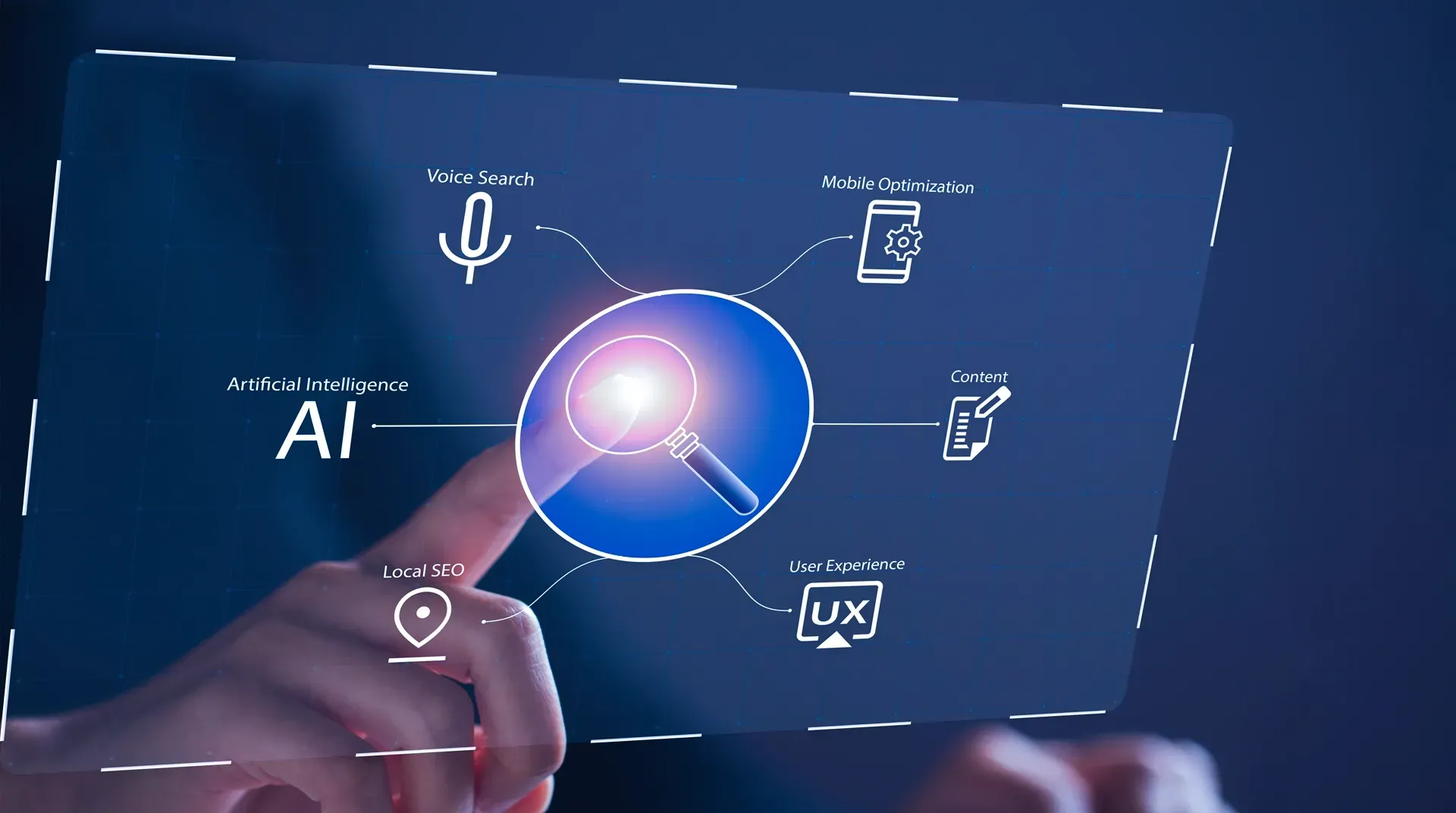
Summary: A year ago, SEO mostly meant competing for visibility on Google. In 2026, your next customer may ask ChatGPT, Perplexity, or Google's AI Mode which business to choose and receive a shortlist instead of a page of search results. Here's what changed, why a strong Google ranking no longer tells the whole story, and what Houston and The Woodlands businesses can do about it.
What Is Adaptive SEO?
Adaptive SEO is an approach to search optimization that builds on the foundations of traditional SEO (a strong website, useful content, accurate business information, and a complete Google Business Profile) while also considering how businesses are discovered through AI-powered search and recommendation tools.
At
WSI Urdaneta Group, we call our approach
WSI AdaptiveSEO®, part of what we describe as Adaptive Search Everywhere Optimization: helping businesses build a consistent, credible presence wherever customers search for information and recommendations. The goal isn't to replace Google SEO. It's to expand the places where your business can be discovered.
How Customers Searched in 2025 vs. 2026
In 2025, the local search playbook was fairly familiar: show up on Google, maintain your Google Business Profile, earn reviews, and make sure your website answers customers' questions. Most of that still matters, but something significant has been added to the mix.
According to BrightLocal's 2026 Local Consumer Review Survey, based on a representative panel of 1,002 U.S. adults, 45% of consumers said they had used AI tools such as ChatGPT and other generative AI tools to find local business recommendations in the previous 12 months, up from 6% the year before. Google remained the leading source, but its share fell from 83% to 71%. Because survey questions and methodology can change from year to year, these figures are best read as a directional measure of changing behavior rather than a perfect year-over-year comparison.
That 45% figure does not mean consumers have stopped using Google. It means AI has moved from a niche behavior into a significant part of the local discovery process: BrightLocal found that AI tools had become the third most popular source of local business recommendations in its 2026 survey.
Search behavior is also changing in another way: fewer Google searches result in a click to a website. Using Similarweb clickstream data from its desktop and mobile web panel, SparkToro estimated that 68.01% of U.S. Google searches from January through April 2026 ended without a click. More of the customer journey now happens inside search results, maps, review platforms, social networks, and, increasingly, AI-generated answers.
Why Ranking on Google Doesn't Guarantee Visibility in AI Search
Here's the part many business owners don't expect: appearing prominently in Google's traditional results does not automatically mean your business will appear in an AI-generated answer.
A 2026 Moz analysis of nearly 40,000 queries in the U.S. and U.K. found that 88% of Google AI Mode citations did not exactly match URLs appearing in Google's organic top 10 for the same query. At the domain level, the overlap was higher, but still only about one in five citations came from a domain in the traditional top 10. This finding applies specifically to Google AI Mode; Google AI Overviews, ChatGPT, Gemini, and Perplexity can use different sources and produce different results.
The local picture shows how selective AI recommendations can be. SOCi's 2026 Local Visibility Index analyzed about 350,000 locations across 2,751 multi-location brands in the United States. In its benchmark, 35.9% of locations appeared in Google's local 3-Pack, compared with 1.2% recommended by ChatGPT, 11.0% by Gemini, and 7.4% by Perplexity.
These numbers come from a specific multi-location brand dataset and shouldn't be read as a universal ranking formula. But they illustrate an important point:
visibility in traditional local search and visibility in AI-generated recommendations are not the same measurement. That is the real shift in 2026. Businesses now have more than one search environment to understand.
Learn how WSI Urdaneta Group's Adaptive SEO helps Houston businesses get found in Google and AI search →
What AI-Powered Search Looks for in a Business
No published checklist guarantees a business will be recommended by ChatGPT, Google AI Mode, Gemini, or Perplexity. What we can see is that these systems increasingly draw information from multiple sources rather than relying on the ranking of a single webpage. For local businesses, four areas deserve attention.
Reviews and Trust Signals
BrightLocal's 2026 research found that 97% of consumers read reviews for local businesses. Among the 455 consumers in the survey who had used AI for local recommendations, 88% said they fact-check reviews cited by AI tools.
AI may introduce your business. Reviews help customers evaluate it.
Fresh, detailed reviews and thoughtful responses remain part of the trust picture, and they give AI systems more information about the experiences customers associate with your business.
Mentions Across the Web
Your website is only one representation of your business. Research from Ahrefs analyzing 75,000 brands found strong correlations between AI visibility and brand mentions across the web. In its 2025 analysis, web brand mentions showed a correlation of 0.664 with visibility in Google AI Overviews, compared with weaker correlations for traditional link metrics such as Domain Rating, referring domains, and backlinks.
Correlation is not causation, and the study does not establish that acquiring more mentions will increase AI visibility. What it does suggest is that brand presence beyond your own website matters. That is the thinking behind Search Everywhere Optimization: your business should be accurately represented across the platforms, directories, publications, and social channels that customers and AI systems may encounter.
A Complete and Consistent Google Business Profile
Your Google Business Profile remains an important source of business information. Name, address, phone number, hours, categories, services, and other core details should be accurate and consistent wherever your business appears online.
This matters because AI-generated local recommendations can contain inaccurate information. SOCi's 2026 Local Visibility Index found that business information presented by ChatGPT was accurate for 68.3% of the locations it evaluated, and Perplexity's accuracy rate was 68.0%. A strong local presence isn't just about being visible; it's about making sure the information customers find about you is correct.
Content That Answers Real Questions
AI-powered search needs information it can interpret and use. That makes clear, focused content increasingly valuable: pages that explain what you do, where you operate, who you serve, what your services include, and how customers can get started. The goal isn't to write for a chatbot. It's to make your business information clear and useful enough to be understood by both people and the systems helping them find answers.
See our GEO and AEO guide to structuring content for AI answer engines →
Read our guide to Google Business Profile optimization for Houston businesses →
See how our Online Reputation services help Houston businesses earn and manage reviews →
What This Means for Houston and The Woodlands Businesses
Houston is a large, highly competitive market, and local intent can vary from one area to another. A homeowner in Tomball, a business owner in The Woodlands, and a shopper in Cypress may ask an AI tool essentially the same question and receive different recommendations based on location, context, and the information available to the system. That makes local specificity more important, not less: clearly communicate the areas you serve and keep that information consistent across your website, business profiles, directories, and other online mentions.
We've seen an example of this with one of our B2B clients, High Point Sales and Marketing, a food broker serving the consumer packaged goods sector. Following a website redesign, a B2B SEO strategy, and broader authority-building work, the company's website began appearing as a cited source in ChatGPT for food-broker-related information.
The lesson isn't that one particular tactic made ChatGPT cite the company. It's that building a clear, authoritative, well-structured digital presence can create visibility across more than one search environment.
Read the full High Point case study →
How to Start Without Rebuilding Your Marketing
You don't need to replace your marketing strategy overnight. Start with what you can measure and control.
1. Run a simple AI visibility test
Ask ChatGPT, Perplexity, and Google AI Mode the kinds of questions a real customer might ask about your category and location. For example:
- "Who are the leading landscaping companies in Tomball, TX?"
- "Recommend an employee benefits advisor in Houston."
- "Which HVAC companies near The Woodlands have strong customer reviews?"
Record whether your business appears, which sources are cited, and how the AI describes your company. Then repeat the same questions periodically. This won't produce a universal "AI ranking," but it gives you a practical baseline for monitoring how your business is represented.
2. Fix your foundation
Make sure your Google Business Profile is complete and accurate, and that your business name, address, phone number, hours, services, and other key details are consistent across the web. Don't overlook reviews: recent, authentic customer feedback remains an important part of local discovery and decision-making.
3. Build pages that answer real questions
Look at the questions your customers ask your team every week and turn the best ones into useful website content. Create service pages that clearly explain what you offer, and answer common questions in plain language, covering location, pricing factors, processes, qualifications, and anything else customers need before contacting you.
4. Earn mentions beyond your website
Look for legitimate opportunities to build your presence outside your own domain: local publications, industry associations, professional organizations, partner websites, relevant directories, interviews, and community organizations. The goal isn't to collect mentions for their own sake. It's to build a consistent, credible picture of your business across the web.
If you want to see how these changes affect another local industry, our article on
how AI is changing landscaping between 2025 and 2026 explores the same broader shift: customers are using more sources to research businesses, and companies are adapting to a more fragmented search environment.
Common Questions Houston Businesses Ask
Is Adaptive SEO different from traditional SEO?
Yes. Traditional SEO focuses primarily on visibility in search engines such as Google, while Adaptive SEO keeps those fundamentals and expands the strategy to AI-powered search and recommendations, along with the broader set of platforms where customers discover and evaluate businesses. At WSI Urdaneta Group, our approach is called WSI AdaptiveSEO®.
If I rank well on Google, will AI tools recommend me too?
Not automatically, because AI-powered systems can draw from different pages, websites, platforms, reviews, and other sources than Google's organic results. Moz's 2026 research into Google AI Mode illustrates the difference: 88% of its AI Mode citations did not exactly match URLs in the organic top 10 for the same query. Ranking well remains valuable; it just isn't the only form of visibility worth measuring.
Can I pay to be recommended by ChatGPT or Perplexity?
You can't pay to be named in the answer itself. ChatGPT does show ads, but OpenAI says they are clearly labeled as sponsored and do not influence its answers. Being recommended depends on the signals AI can find about your business: reviews, mentions, accurate information, and useful content.
How do I know if my business shows up in AI search?
Test it by asking several AI tools the same customer-style questions about your service and location, and record whether your business appears, what sources are cited, and how your company is described. Repeat the test over time. Because AI search experiences can produce different results, measuring across more than one platform gives you a more useful picture than relying on a single query.
Do I still need Google Ads and a good website?
Yes. A strong website provides the information and conversion experience customers need, SEO builds organic visibility, Google Ads puts your business in front of people actively searching for your services, and reputation and local listings help establish trust. Adaptive SEO adds another layer by considering how your business is discovered and represented in AI-powered search. These are complementary pieces of a broader digital marketing strategy.
Ready to Get Found Where Your Customers Are Searching?
At WSI Urdaneta Group, we help businesses across Houston, The Woodlands, Cypress, Spring, Tomball, Conroe, Magnolia, and Katy build a stronger presence across search, local platforms, and AI-powered discovery.
If you're not sure how your business appears in AI search today, the first step is finding out. We can help you evaluate your current visibility, identify gaps in your digital presence, and develop a practical strategy for improving how customers find and understand your business.
Get started:
- Schedule a free consultation with WSI Urdaneta Group
- Explore our Adaptive SEO services
- See how we've helped Houston businesses grow through our customer stories and case studies
- Learn about our AI Consulting services
- Call us directly: (713) 352-0580
Let's help your business become easier to find wherever your customers search.
Sources
- BrightLocal, Local Consumer Review Survey 2026, February 2026.
- BrightLocal, Nearly Half of Consumers are Asking AI for Business Recommendations, March 2026.
- SparkToro / Similarweb, In 2026, Less than One Third of Google Searches Still Send a Click, June 2026.
- Moz, Only 12% of AI Mode Citations Match URLs in the Organic SERP, February 2026.
- SOCi, 2026 Local Visibility Index.
- Ahrefs, An Analysis of AI Overview Brand Visibility Factors, 2025.
- OpenAI, Our approach to advertising and expanding access to ChatGPT.
The Best Digital Marketing Insight and Advice
Our Blog is a great place to get tips, tricks, and best practices on all things digital marketing in Houston. Subscribe and get our posts as soon as they are published.
Subscribe Blog
For information on our privacy practices and commitment to protecting your privacy, check out our Privacy Policy and Cookie Policy.
Don't stop the learning now!