

Building Local Presence in Houston: Why You Need Localized Content On Your Website

A circular badge with a blue globe icon, the text
Juan Carlos Urdaneta
November 18, 2025

Creating a strong local presence is crucial for businesses looking to connect with the Houston community. SOCi’s Consumer Behavior Index research found that 80% of U.S. consumers search for information about local businesses online weekly. Integrating localized content into your website is a powerful way to connect with these consumers.


Localized content goes beyond just mentioning a location—it provides a sense of relevance, engagement, and relatability to Houston-based customers, ultimately boosting brand trust and online visibility.


What is Localized Content


Localized content is tailored information that speaks directly to a particular region, in this case, Houston. It can include references to local landmarks, neighborhoods, weather conditions, events, or specific customer needs. This type of content resonates with readers by acknowledging their unique experiences and environment, making it more engaging and relatable.


Benefits of Localized Content


Localized content offers numerous advantages for Houston-based businesses:


  1. Better Search Rankings: Google prioritizes websites that include region-specific keywords. Creating content that mentions Houston and nearby areas can boost your site’s SEO, helping it appear in local search results.
  2. Increased Customer Engagement: People are more likely to connect with familiar content, and content that speaks directly to Houston’s culture and preferences can increase engagement rates.
  3. Enhanced Credibility: Localized content shows that you understand the Houston community, building trust with potential customers who see your brand as relevant and knowledgeable.


Effective Strategies to Create Location-Based Content for Your Website


To create compelling localized content, focus on Houston-specific topics that matter to your audience. Here are some strategies:


  1. Local SEO Keywords: Research potential Houston-based keywords related to your business, such as “Houston coffee shops” or “HVAC services in Houston,” and integrate them into your website to be more discoverable by locals. Try using keyword tools like Google’s Keyword Planner to find Houston-based search terms that match your business.
  2. Highlight Local Culture and Events: Discuss neighborhood trends and updates, upcoming events, or city news that might interest your audience. This keeps your content fresh and relevant. Phrases highlighting the city’s unique character, like popular landmarks or Houston’s seasonal trends, make your content more personalized.
  3. Local Customer Testimonials: Showcase reviews and stories from Houston customers to build social proof and foster a community vibe around your brand.


How to Use Localized Content to Improve Search Engine Rankings


By including Houston-specific keywords and phrases in your service pages, product descriptions, and blog posts, you signal to Google that your website is tailored to the area. Include these keywords in headings, meta descriptions, and URLs. Creating a Google My Business listing and linking it to your website further boosts your local ranking, ensuring your business is visible to Houston customers.


Can Localized Content Benefit Online Businesses?


Yes! Localized content can still benefit you even if you run an online business. Highlighting connections to Houston can build trust and foster a sense of community. Plus, by focusing on location-based keywords, you can rank higher in local searches, potentially drawing in customers from Houston.


Why Local Presence Matters for Businesses in Houston


Houston is a dynamic and diverse city, and building a local presence can set you apart in a competitive market. Localized content shows customers your business understands their unique needs and environment, making your brand more relatable and memorable. This helps develop a loyal customer base that values your commitment to the local community.


Conclusion


Localized content is a powerful tool for building a strong local presence in Houston. It fosters engagement, builds credibility, and improves search engine rankings—all of which help you connect meaningfully with the Houston community. 


To make the most of your local presence, leverage WSI Urdaneta Group's expertise. We help SMBs thrive with localized digital marketing that drives results. Book a consultation with one of our experts today!


The Best Digital Marketing Insight and Advice

Our Blog is a great place to get tips, tricks, and best practices on all things digital marketing in Houston. Subscribe and get our posts as soon as they are published.

Subscribe Blog

I consent to WSI collecting my contact details and sending me digital communications.*

*You may unsubscribe from digital communications at anytime using the link provided in WSI emails.
For information on our privacy practices and commitment to protecting your privacy, check out our Privacy Policy and Cookie Policy.

Don't stop the learning now!
Here are some other blog posts you may be interested in.
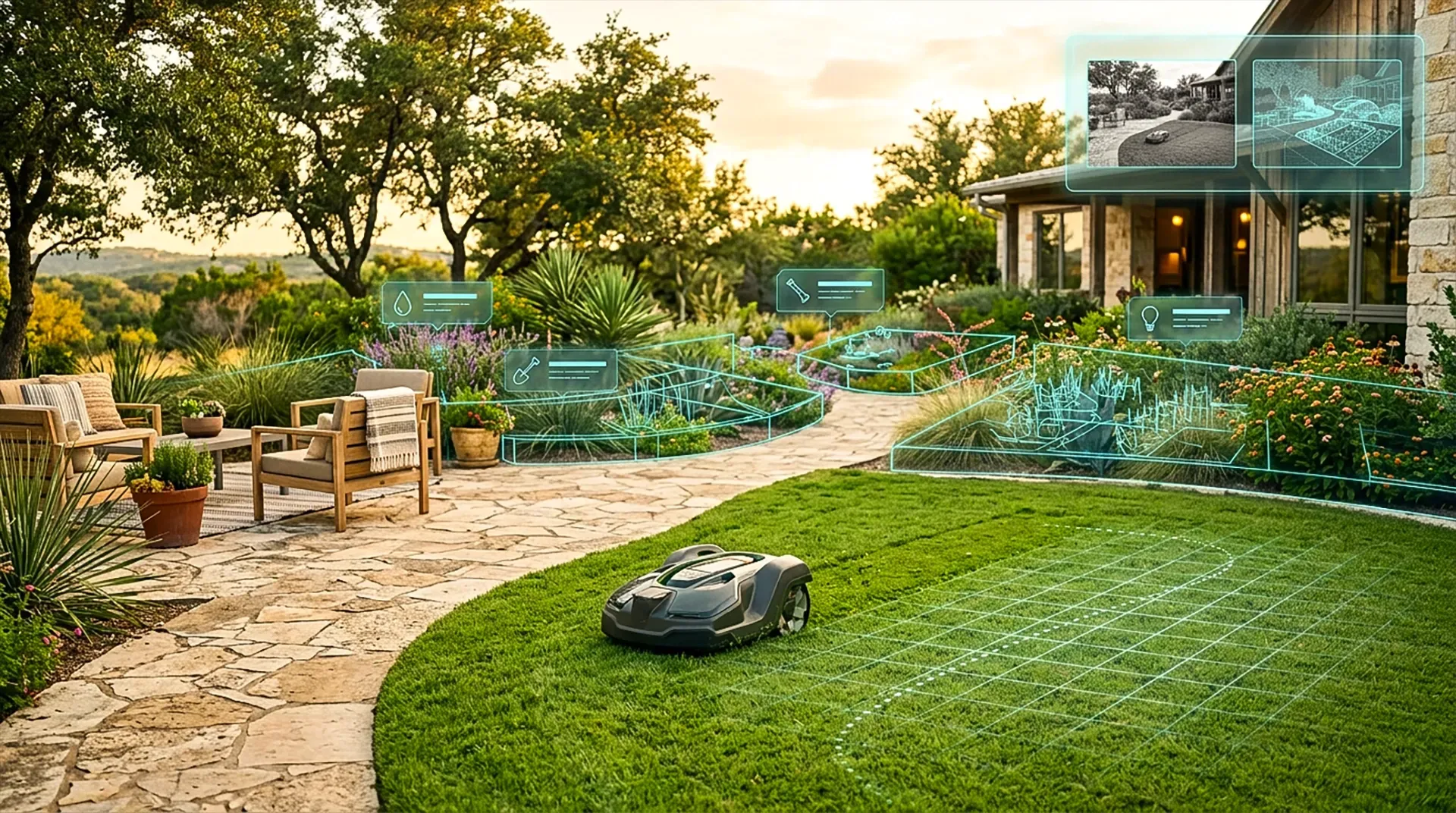
The Evolution of AI in Landscaping: What Changed From 2025 to 2026 blog image
By Juan Carlos Urdaneta August 20, 2026
Summary: A year ago, AI in landscaping meant uploading a photo and getting one styled image back. By 2026, it means full design pipelines, smarter robotic mowers, predictive routing, and AI-driven client retention. Here's what actually changed, and what it means for landscaping businesses in Houston and The Woodlands. Where Landscaping AI Stood in 2025 In 2025, AI adoption in the green industry was more talk than practice. According to the 2025 Aspire Landscape Industry Report, 83% of landscaping professionals had not adopted any AI tools. The tools that existed were narrow: a photo in, one styled rendering out. No zone-verified planting suggestions, no contractor-ready deliverables, no real integration with day-to-day operations. The businesses that did adopt AI, though, reported a clear payoff. Every respondent in that 17% who had implemented AI said it positively impacted their business. That gap between adoption and results is exactly what changed over the following year. What Actually Changed in 2026 AI Design Tools Went From One Render to Full Pipelines Twelve months ago, AI landscape design meant uploading a yard photo and picking a style preset. Want a different angle? Run it again. In 2026, the same request produces a full pipeline: multiple photorealistic renders, a planting plan checked against USDA hardiness zones, and in some tools, a contractor blueprint and bill of quantities, generated from a single upload. For Houston landscaping businesses, this matters at the sales stage. The biggest objection in a landscaping pitch is usually "I can't picture it." Showing a homeowner in The Woodlands or Tomball a realistic rendering of their own yard, on the spot, changes that conversation. Robotic Mowers Got Smarter (and More Popular) The robotic mower market moved from a niche product to a real category. Global market value is projected to grow from $8.47 billion in 2024 to $21.97 billion by 2033. Manufacturers leaned in hard: Husqvarna alone launched 13 new boundary wire-free models, and newer AI vision systems now include obstacle avoidance and night operation. For commercial landscaping crews in Greater Houston, this shifts labor away from routine mowing and toward higher-value work like design, hardscaping, and client-facing services. Operations: Smarter Routing and Predictive Maintenance The most practical AI adoption in landscaping isn't in design; it's in the back office. AI-driven route optimization now factors in real-time traffic and weather to cut travel time between jobs. Predictive maintenance flags equipment issues before a mower or truck breaks down mid-route. And AI-enabled irrigation systems adjust watering based on soil and weather data instead of a fixed schedule, which matters directly in a market with Houston's rainfall swings and water restrictions. Client Retention Became an AI Use Case Too Landscaping has historically focused on winning new clients. That's shifting. Industry reporting shows 54% of contractors now name client retention as vital to their bottom line, and for good reason: existing relationships already account for the majority of revenue at most landscaping companies. AI-driven CRM tools are starting to flag at-risk accounts, declining engagement, or service gaps before a client cancels, making retention proactive instead of reactive. See how WSI Urdaneta Group helped Rosehill Palms grow with a full digital strategy → The Adoption Gap: Why Most Houston Landscaping Businesses Are Still Waiting The barriers haven't disappeared. Landscaping professionals who haven't adopted AI cite cost (50%), lack of time (49%), and the learning curve (43%) as the top reasons. Those are legitimate concerns for a business running lean crews and thin margins. But the same data shows that businesses that adopted AI aren't reporting mixed results. They're reporting consistent gains. In a market like Houston, where Green Industry competition is dense across Tomball, Cypress, Spring, and Conroe, that gap between "waiting" and "adopting" is becoming a real competitive edge, not just a talking point. What This Means for Houston Landscaping Businesses You don't need to become a tech company to benefit from any of this. The businesses seeing results in 2026 aren't necessarily the biggest ones; they're the ones that picked one or two practical applications and stuck with them: AI-assisted design renders to close more sales, route optimization to get more done with the same crew, or a retention-focused CRM to protect the client base they already have. The common thread is starting narrow. Trying to adopt everything at once is exactly how landscaping businesses end up back in the 83%. Learn how WSI Urdaneta Group's AI Consulting services can help your business identify the right starting point → How Houston Landscaping Businesses Can Start Without Overhauling Everything Pick one workflow. Not five. The businesses that adopt AI successfully usually start with a single pain point: sales visuals, route planning, or client communication, not a full operational overhaul. Involve your team early. The learning-curve barrier is real, but it's smaller when crew leaders and account managers help choose the tool, not just being told to use it. Measure before and after. Track the specific metric the tool is supposed to move, whether that's close rate on estimates, drive time between jobs, or client churn, so you know if it's actually working for your business. Pair operational AI with visibility. None of this matters if potential clients can't find you first. As AI-powered search tools like ChatGPT and Google AI Overviews become part of how Houston homeowners research landscaping companies, showing up there matters as much as showing up in the Map Pack. Explore Adaptive SEO for Houston landscaping and Green Industry businesses → Common Questions Houston Landscaping Businesses Ask Do I need AI to stay competitive in Houston's landscaping market? Not immediately, but the gap is widening. Most businesses still haven't adopted AI, but the ones that have report consistent gains, and early adopters in a competitive market like Houston, Tomball, and The Woodlands tend to keep that advantage as tools mature. What's the easiest place to start with AI in a landscaping business? Sales-side design tools tend to have the fastest, most visible payoff. Showing a client a realistic rendering of their property on the spot shortens the sales conversation without changing how your crews operate. Is AI going to replace landscaping crews? No. Every credible industry report points in the same direction: AI handles routine, repeatable tasks like scheduling, routing, and initial design drafts, freeing crews and designers to focus on the work that requires judgment and craft. How does this connect to how customers find my business? Increasingly, through AI. Search is expanding beyond Google into tools like ChatGPT and AI Overviews. A landscaping business that only optimizes for traditional search results risks becoming invisible in the newer channels homeowners are starting to use for research. Ready to Bring AI Into Your Landscaping Business the Right Way? At WSI Urdaneta Group , we work with Green Industry businesses across Houston and The Woodlands, as an official TNLA member, to figure out where AI actually fits, and where it doesn't. Whether that's identifying the one workflow worth automating first, or making sure your business shows up when Houston homeowners search for landscaping help, we can help you build a plan instead of guessing. Get started: - Schedule a free consultation with WSI Urdaneta Group - Explore our AI Consulting services - See how Rosehill Palms grew with WSI Urdaneta Group - Call us directly: (713) 352-0580 Let's find the AI that actually fits your landscaping business, not just the trend.
Google Business Profile Optimization: What Houston Businesses Get Wrong image blog
By Juan Carlos Urdaneta May 8, 2026
Most Houston businesses waste their Google Business Profile. Learn what top-ranking Houston companies do differently to dominate local search and drive more calls.